
The 44 Jobs Most at Risk from AI

The Rise of AI and the Future of Work
Artificial Intelligence (AI) is rapidly evolving, and with it comes a growing concern about its impact on employment. OpenAI, the company behind the widely used chatbot ChatGPT, has released a report that highlights the potential for AI to replace certain jobs. According to the report, 44 specific occupations are most at risk of being taken over by AI.
The Study and Its Findings
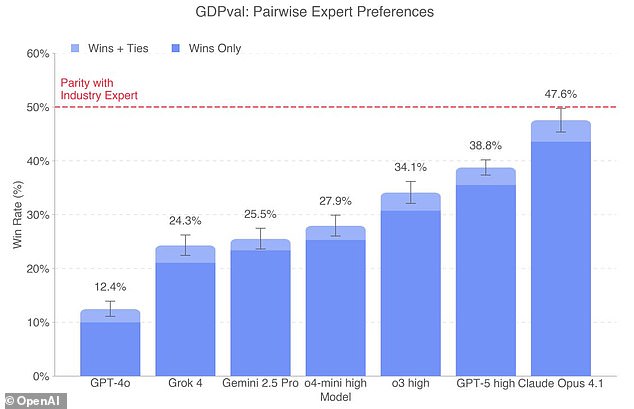
The research was conducted using a test called GDPval, which compared how AI performed against professionals in nine of the most financially significant industries in the United States. Human experts evaluated tasks completed by both AI and real professionals, determining which was better. The best-performing AI model, Anthropic’s Claude Opus 4.1, beat human experts 47.6% of the time on average, with even higher win rates in some roles.
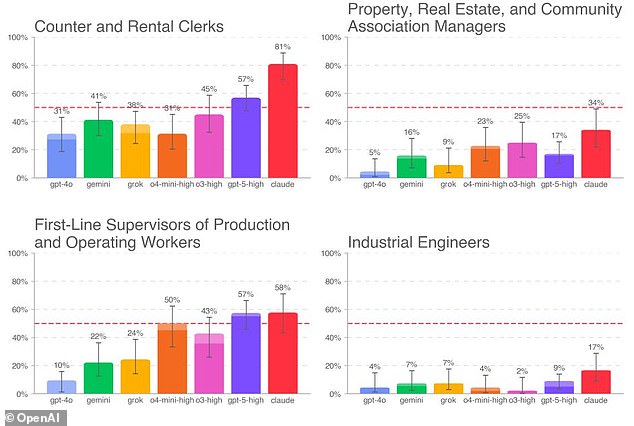
For example, when competing against counter and rental clerks, the AI outperformed the professional in 81% of cases. OpenAI stated, “We found that today’s best frontier models are already approaching the quality of work produced by industry experts.”
The Industries Most Affected
5 Simple Ways to Ease Financial Stress Now
Crypto 2025: How Will Make You Real World Rich
25 Financial Habits Through Good Money

Each of the 44 professions was assessed on specific tasks that someone in that role might need to do. For instance, registered nurses were asked to assess skin lesion images and create a consultation report, while manufacturing engineers were tasked with making a 3D model of a cable reel. The human assessors did not know which of the tasks were done by humans or AI; they simply had to choose which they thought was best.
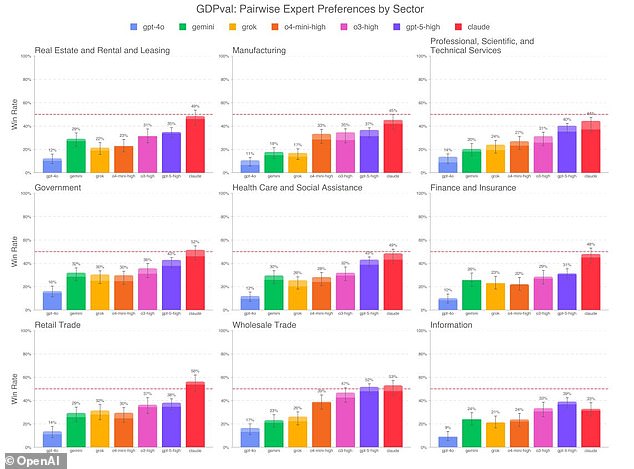
The sectors where AI most frequently outperforms humans are retail trade, wholesale trade, and government jobs. In retail trade, some chatbots beat professionals 56% of the time on average. This is closely followed by the wholesale trade sector, with an AI win rate of 53%, and government jobs like compliance officers and social workers, with a 52% AI win rate.
The Jobs Most at Risk
Here are the jobs most likely to be replaced by AI based on their AI win rate:
- Counter and rental clerks: 81%
- Sales managers: 79%
- Shipping, receiving, and inventory clerks: 76%
- Editors: 75%
- Software developers: 70%
- Private detectives and investigators: 70%
- Compliance officers: 69%
- First-line supervisors: 69%
- Sales representatives: 68%
- General and operations managers: 67%
The safest industry is the information sector, which includes directors, film producers, and journalists, where even the best performing model only won 39% of the time.

However, some individual professions within those industries fared far worse than the average. Sales managers were beaten by some AI models 79% of the time, while shipping and receiving clerks were beaten by AI 76% of the time. Editors were outperformed by their robot rivals in 75% of cases. Even some distinctly human professions could be at risk of replacement with AI, as private detectives and investigators failed to outperform robots 70% of the time.
The Performance of Different AI Models
The AI’s win rate varies strongly between different models, with some chatbots performing better on certain types of tasks. Claude’s Opus 4.1 lacked accuracy but scored a very high win rate due to its tendency to make pleasing graphics. OpenAI’s own top-of-the-line model, GPT5-high, had an average win rate against all professions of 48.8% and excelled in accuracy.
By comparison, OpenAI’s GPT-4o, which was released just 15 months ago, had a win rate of just 12.4%. That stark difference in win rate shows how fast AI is catching up with humanity and how much of an impact it could soon have on all our jobs.
The Human Perspective
OpenAI’s CEO, Sam Altman, has expressed concerns about the potential job losses caused by AI. He has suggested that up to 40% of all jobs could be automated by AI at some point in the future. However, OpenAI does not claim this study suggests humans will soon start losing their jobs to AI. Instead, the company frames these results as showing how AI might “support people in the work they do every day.”
Conclusion
As AI continues to advance, it is clear that certain jobs are more vulnerable than others. While some professions may find ways to adapt and integrate AI into their workflows, others may face significant challenges. The future of work remains uncertain, but one thing is clear: AI is here to stay, and its impact on the job market will only grow in the coming years.
Which one are you watching, Xplorianz? Drop your take on the most underrated pick this week in the comments!. Slide into our inbox Facebook, or tag us on X . Stay sharp, stay weird, and keep Xploring
Disclaimer:
This article is for informational and entertainment purposes only and does not constitute financial advice. Always do your own research (DYOR) before making any investment decisions, your money, your call. Crypto’s wild, so stay sharp out there!







Tidak ada komentar